

👩🏼 👋 Allow us to reintroduce ourselves
We’ve had quite a whirlwind of activity going on over here at Broca, so I thought I’d share some of our story and progress (and give some insight into where we’re going next).
For those of you who have been with us since the very beginning, you know we started Broca to give my mom a way to participate in real-time conversations after a stroke took away her ability to verbalize her thoughts and intentions. We’ve heard from many people in similar situations. It’s frustrating for the people trying to communicate, and maybe equally frustrating when you can’t understand what someone wants, feels, or needs. Not to mention, self expression goes far behind basic human needs. It’s an impossible situation, and very unfair. Time goes by (in our case, 4 years), and we start to accept the relationship the way it is, leaving the person with aphasia to muddle through various tools and devices without ever really finding a great solution… or coming to find peace with the reality of the situation. I wish I could say our experience is unique, but in the last 4 years I’ve come to learn it is a somewhat common occurrence—certainly a part of the human experience that should be more well-known and understood than it is.
AI has changed so much of this, so fast. Things that weren’t possible just 2 years ago are possible now. At Broca, we’ve done a lot of work on our unique mix of inputs that make our suggestions great. The reason it feels like Broca “knows” the speaker is because the parameters and context window we’ve defined for our LLM are extraordinarily dialed-in. The way the suggestions generate is no accident.
As we continue to iterate, we know there is no replacement for speech therapy and true speaking ability—but we believe we can offer something no one else has, and help people in a way that the existing tools simply can’t. We’re proud of the concept, proud of the work, and have an unbelievable runway of features on our backlog we can’t wait to bring to market. We want Broca to be so smart, so fun, and so easy to use, that people with aphasia are just a quick reference to their phone away from witty banter, a personalized reply, or a word of encouragement. I’m doing this for my mom, but I’m also doing it for everyone else in my shoes. People with aphasia are the same as they always were—it’s time to give them the resources they need to express the big personalities they’ve always had.
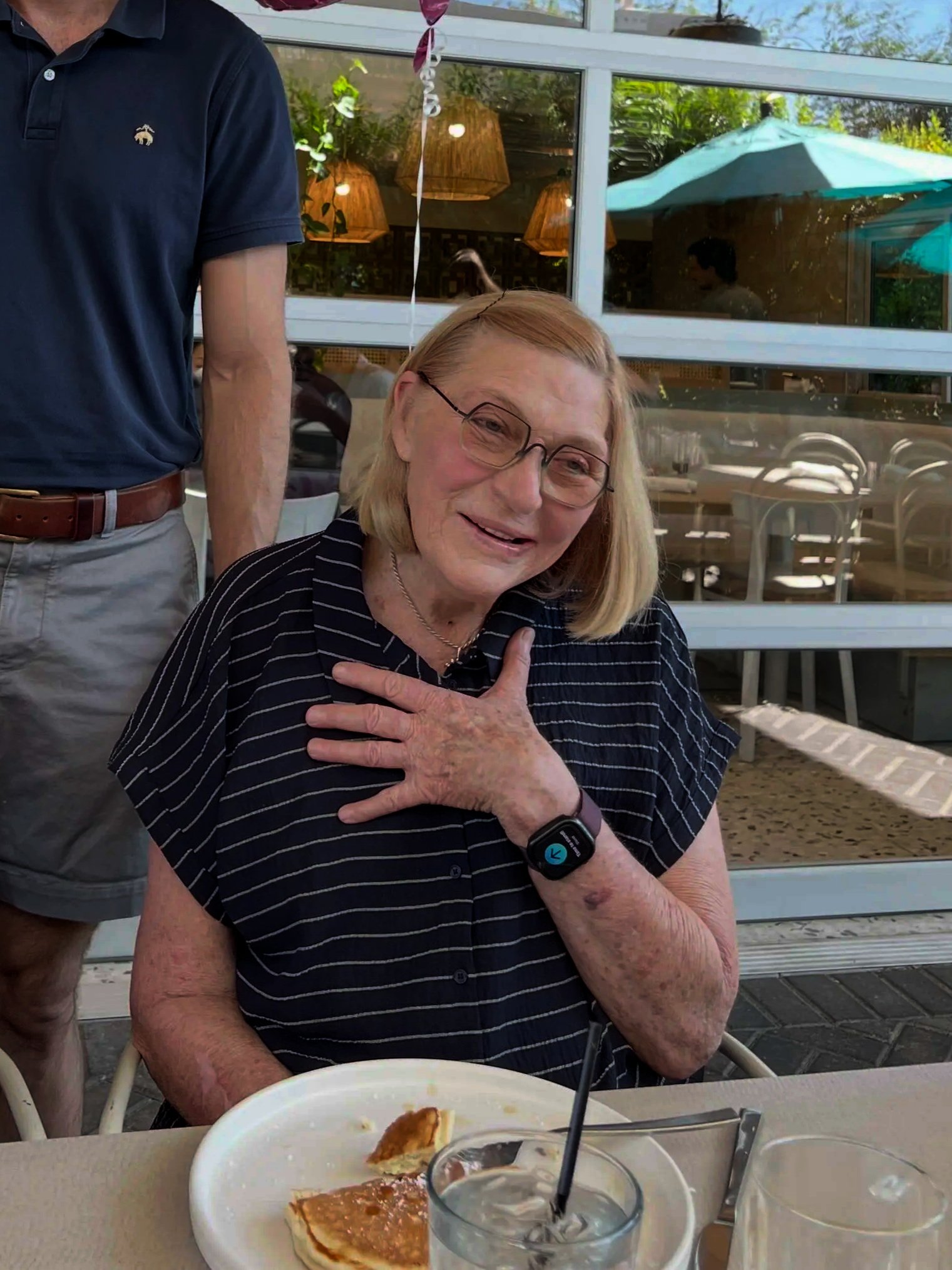
My mom on mother’s day, 2026.